
 English
 Français
 Turkish
 Swimming Competition Timing Systems
In swimming competitions, performance differences are often extremely small. For that reason, timing systems must do far more than simply record elapsed time. They must deliver results that are accurate, verifiable, redundant, and aligned with international competition standards. World Aquatics rules and technical documentation make it clear that automatic timing infrastructure plays a central role in competition management. The fact that world records are recognized only when supported by automatic timing systems shows just how critical measurement reliability is.
Why is timing precision so critical?
In professional swimming, the issue is not whether a stopwatch works. The real issue is whether the start moment, split times, finish touch, and any post-race review can all be captured within a system architecture that validates each event consistently. In the World Aquatics ecosystem, touchpads, false-start capable starting blocks, backup timing devices, and official result workflows operate together. This shows that confidence should not be placed in a single device, but in the integrity of the full timing architecture.
Core components of a high-quality swimming timing system
The first question in any professional timing setup is: what is the primary measurement source? In modern swimming competitions, the touchpad installed at the pool wall is the primary source for finish and split data. However, in serious competition environments, a single sensor is never considered sufficient on its own. Since race integrity is critical, the system must include a secondary layer capable of validating the result if a touch is missed or a field-side fault occurs. World Aquatics technical rules also establish automatic timing as the primary method, while allowing semi-automatic procedures to support result determination in the event of failure.
That is why a high-quality system should combine:
- highly precise primary time capture
- low-latency data transmission
- backup timestamp generation
- start and false-start event traceability
- official reporting and printout capability
- resistance to humidity, pool chemicals, and electromagnetic interference
Measurement precision is not only about the sensor
Timing precision is often associated only with the quality of the touchpad, but actual performance depends on the entire signal chain. If synchronization is weak between the timer console, field I/O units, start system, backup buttons, and scoreboard integration, even a high-grade sensor cannot deliver dependable competition results. That is why professional systems depend on deterministic timestamping — the ability to record events with predictable and consistent timing references. LEDECH emphasizes this architecture in its swimming timing platform. Its SKL-SWC-V2 Timer Console is presented as a central control unit designed for high-accuracy timestamping, synchronized I/O management, and integration across the competition environment. The product information also states that calibration is supported by ISO/IEC 17025 accredited laboratories, which is an important indicator of measurement quality.
Pool infrastructure also affects timing accuracy
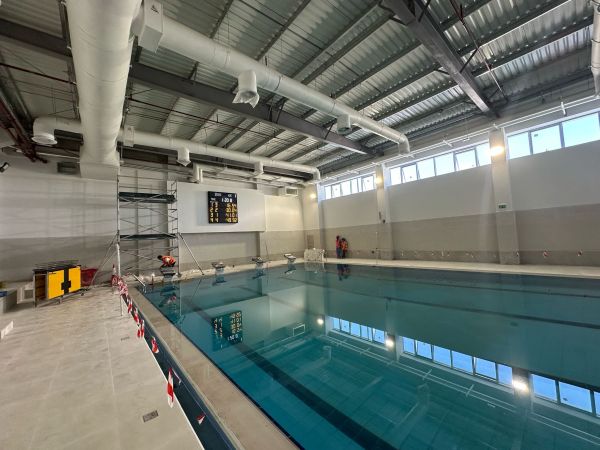
Another key point is that timing accuracy is influenced not only by electronics, but also by the physical conformity of the pool. World Aquatics facility rules define pool length tolerances based on measurements taken between the automatic officiating touch panels. This means that correct results depend not just on the quality of the timing equipment, but also on the dimensional accuracy of the venue itself. Accurate competition timing is therefore the result of both electronic precision and compliant pool construction.
Starting blocks and false-start verification
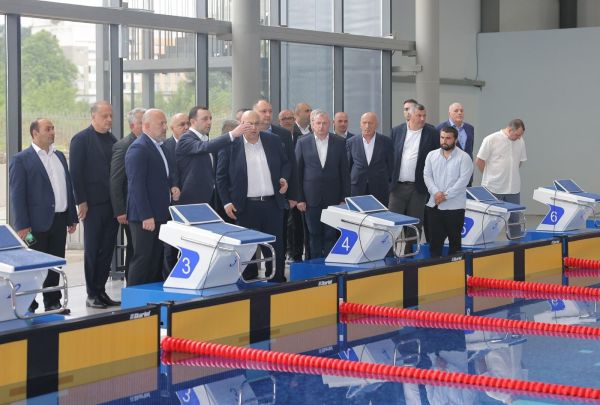
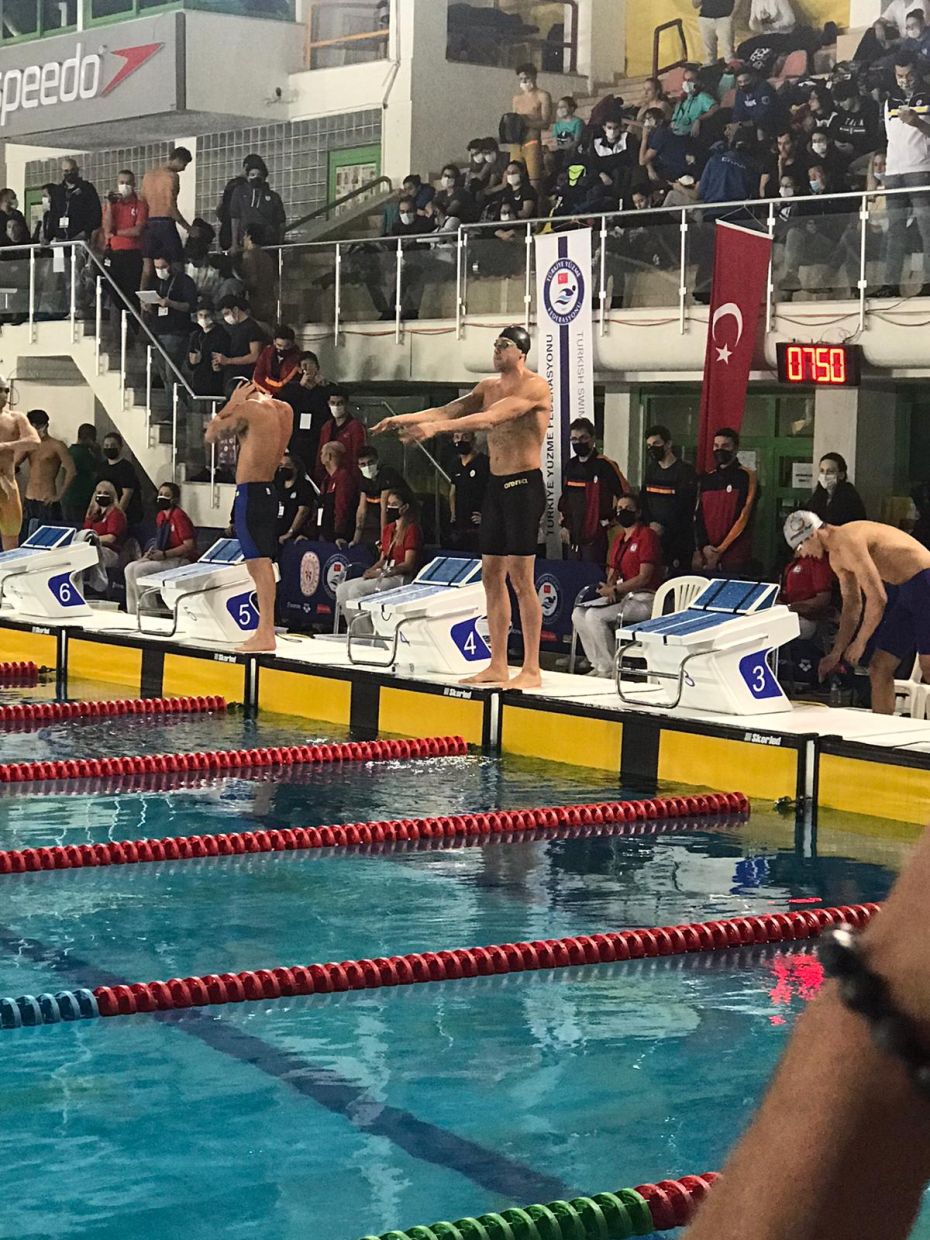
Timing in swimming does not begin at the finish wall. Start quality is also part of the timing ecosystem. Especially in elite competitions, false-start detection and reliable reaction event monitoring are essential. World Aquatics materials identify integrated starting platforms and false-start technologies as important competition infrastructure. LEDECH’s product range includes both standard and false-start capable starting blocks. On its website, models such as SKL-SBF-40 and SKL-RTS-V1 are positioned as components that integrate with the timer console and support traceable start-event monitoring. This provides a meaningful advantage for referees, competition officials, and post-race verification.
Redundancy: the defining feature of professional systems
One of the clearest distinctions between entry-level and professional swimming timing systems is redundancy. LEDECH’s swimming timing platform explains that the touchpad serves as the primary measurement source, while backup buttons generate a secondary timestamp if a touch is not successfully detected. This approach supports post-race verification and data reconciliation. In other words, the system is not only designed to measure time, but also to produce evidence when a result must be reviewed. That capability is what defines quality in major competition environments.
Key strengths of LEDECH swimming timing solutions
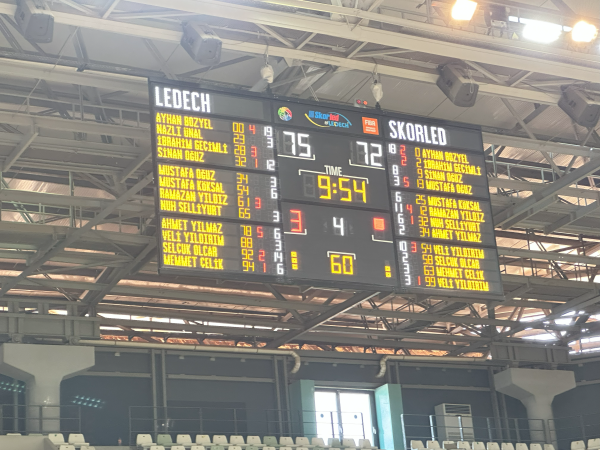
LEDECH’s product presentation suggests a fully integrated system approach rather than isolated hardware sales. Its swimming timing platform includes videoboards, numeric scoreboards, timer consoles, touchpads, starting blocks, race starters, lane box and deck plate units, wall junction boxes, thermal printers, and backup buttons within one coordinated ecosystem. The company also presents the system as compatible with World Aquatics and LEN requirements, and highlights Splash Meet Manager integration for entries, heats, live result handling, and official reporting workflows.
Some of the standout LEDECH components include:
Timer Console – SKL-SWC-V2
Acts as the central control and precision timing core of the system. Its emphasis on calibration and independent verification is a strong quality signal.
Touchpad Series – ST-2490-F, ST-1990, ST-1590
Serves as the primary measurement interface. Water resistance, chemical durability, anti-slip surface design, and protected connectivity support both field reliability and measurement stability.
Starting Blocks – SKL-RTS-V1, SKL-TS-V1, SKL-SBF-40, SKL-SBN-40
Available in standard and false-start capable configurations. These are particularly valuable in professional events where start integrity and event traceability matter.
Race Starter – STR-100
Supports low-latency audible and visual start signaling for consistent race initiation.
Lane Box / Deck Plate / Wall Junction Box
Forms the field-level signal backbone of the system. Low latency, EMI protection, and IP-rated construction are especially important for durable long-term installations.
Backup Buttons and Thermal Printer
Support official backup timing and certified hard-copy result workflows. Console memory logging and queued storage during communication interruptions are important operational advantages.
What should buyers evaluate before choosing a system?
When assessing a swimming timing system, the decision should not be based only on price or the number of visible components. Buyers should ask:
- Is the system aligned with World Aquatics requirements?
- Does it use touchpads as the primary source and backup buttons as the secondary verification method?
- Do the starting blocks support false-start detection?
- Does the timer console offer calibration and independent validation documentation?
- How resistant is the system to EMI, water exposure, and pool chemicals?
- How strong is the integration between result processing, scoreboard display, and meet management software?
Conclusion
In swimming competitions, a high-quality timing system is not simply a set of devices that measures time. It is a fully integrated architecture that supports fair competition, official validity, and operational reliability. True quality emerges when touchpads, timer consoles, starting blocks, backup buttons, signal infrastructure, and scoreboard synchronization are designed to work together as one system. Based on the way LEDECH presents its offering on ledech.com, its swimming timing solutions reflect this integrated philosophy through World Aquatics and LEN alignment, redundant architecture, calibration emphasis, and field durability. This makes the platform a strong professional option for elite events as well as for universities, municipalities, and institutional swimming facilities seeking scalable and dependable timing infrastructure.